
Because leadership shouldn’t be a solo act.
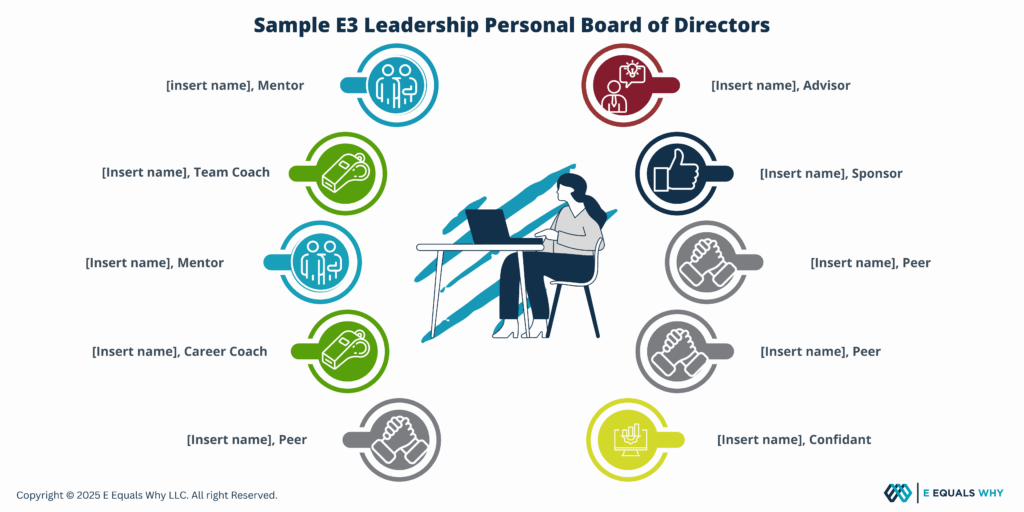
What It Is
In today’s complex professional landscape, success hinges not just on what you know, but who supports you. Establishing a Personal Board of Directors, consisting of mentors, advisors, coaches, peers, sponsors, and confidantes, is essential for anyone serious about their professional and personal development.
A Personal Board of Directors is a handpicked group of seasoned professionals who bring diverse perspectives to help you navigate both career and personal challenges. This board goes beyond mere career advancement; it’s about creating a robust framework for comprehensive leadership development.
Why You Need a Personal Board of Directors
A well-rounded board offers substantial benefits:
• Holistic Support: Provides nuanced feedback that influences your professional choices and personal growth strategies.
• Expanding Perspectives: Pushes you to think critically and challenge your assumptions, broadening your approach to problem-solving.
• Network Expansion: Opens doors to new opportunities by connecting you with individuals outside your immediate professional sphere.
• Accountability: Keeps you on track with your goals, ensuring you remain proactive and focused.
Crafting Your Personal Board of Directors
Building an effective board requires deliberate actions:
- Identify Your Needs: Pinpoint the kind of support you need across various areas of your career and personal life.
- Embrace Diversity: Select individuals from varied backgrounds to bring a wealth of perspectives. Include both internal advisors who understand your current environment and external ones who can provide fresh insights.
- Set Clear Expectations: Engage potential board members thoughtfully, establishing mutual goals and clear expectations right from the start.
- Formalize Relationships: Depending on their role, formalize relationships to clarify commitments and responsibilities.
This doesn’t have to be formal or perfect—but it should be intentional.
We’ve created a free tool to help you define the roles, reflect on your current support system, and map out your Personal Board of Directors.