

We all have blind spots.
Not because we’re bad leaders.
Not because we don’t care.
But because we’re human. And because leadership is hard.
As we navigate shifting priorities, pressure from above, and the reality of life outside of work, we sometimes slip into habits that once served us but no longer do. They are habits that aim to protect us but keep others out. Habits that feel like strength but create distance.
Earlier this month, I ran a poll to validate what I’ve seen across teams and industries.
The question was simple: Which emotional blind spot do leaders miss the most?
Here’s what 88 people shared:
-
• Avoids tough talks – 35%
They tell themselves they’re keeping the peace. But they’re really avoiding the truth.
• Leads with ego – 31%
They believe they’re being confident. But they stop listening, and eventually people stop speaking up.
• Message isn’t clear – 20%
They think they’ve communicated. But people walk away unsure of what’s expected.
• No appreciation – 14%
They assume people feel valued. But no one’s actually said it out loud.
The responses don’t surprise me. They reflect what I’ve seen repeatedly in my coaching and my own career. Most leaders believe they’re protecting their teams by staying positive, keeping things calm, or leading with certainty. But they’re not protecting anyone. They’re disconnecting.
The Truth About Blind Spots
No one wakes up trying to be a bad manager. In fact, most of the leaders I work with care deeply. They want to do right by their teams. But that’s not always how it plays out.
We all have personality traits that show up differently under stress. We all experience seasons where our energy shifts or our awareness dims. We stop asking good questions. We develop tunnel vision. We mistake silence for alignment.
And the basics that made us great in the first place start to slip. Not all at once. Quietly.
That’s what makes blind spots so tricky. They often show up during our busiest, most overwhelming, or emotionally challenging moments. And they’re usually invisible until something breaks.
When I Drifted
This poll hit home for me because I’ve lived it.
Just before I began writing this book, I lost my father. He had been my greatest leadership role model. For three years, I helped care for him, and when he passed, it left a space I didn’t know how to fill.
I kept working. I kept showing up. I kept the train on the tracks.
But I was on autopilot.
Without realizing it, I shifted into control mode. I leaned hard on what I now recognize as masculine energy. I numbed my feelings and focused on tasks. I convinced myself I was being empathetic and supportive, but I wasn’t leading with emotion. I was just managing through it.
On the outside, everything appeared to be fine. But the energy had shifted. My joy was fading, and my team felt it. They couldn’t quite name it, but they were reacting to something I wasn’t ready to admit.
This is what it means to drift.
It doesn’t happen all at once.
It’s the slow fade away from what we know works.
And unless we notice it and course-correct, we stay in that space longer than we should.
The Compass That Brings Us Back
That experience is one of the reasons I wrote this book, and I am excited to publish it soon.
Not to share a new theory or playbook, but to reconnect leaders to the basics that keep us grounded.
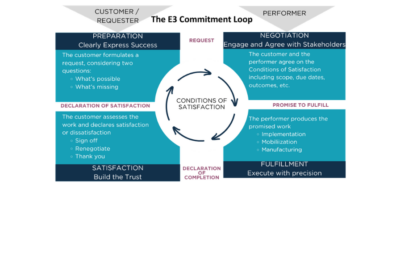
The E3 Leadership Code is simple:
Express + Engage + Execute, each powered by Emotional Qualities like awareness, integrity, courage, and empathy.
This rhythm isn’t just a framework. It’s a compass. One you can return to when FEUD creeps in—fear, ego, uncertainty, or doubt.
One that anchors you when you feel off.
One that helps your team feel steady when they’re watching you for cues.
And that’s what the best leaders do.
They notice when they’ve drifted.
They take responsibility.
And they return to the practices that bring out their best.
Want to Avoid the Blindest of Blind Spots?
Start here:
-
• Ask for feedback. Really listen.
• Don’t just check on results. Check on how people are doing.
• Get more comfortable with discomfort.
• Replace control with clarity.
• Pair confidence with curiosity.
Leadership isn’t about perfection.
It’s about presence.
It’s about noticing when you’ve veered off course and choosing to come back.
Because the best leaders aren’t the ones who never drift.
They’re the ones who always find their way back.